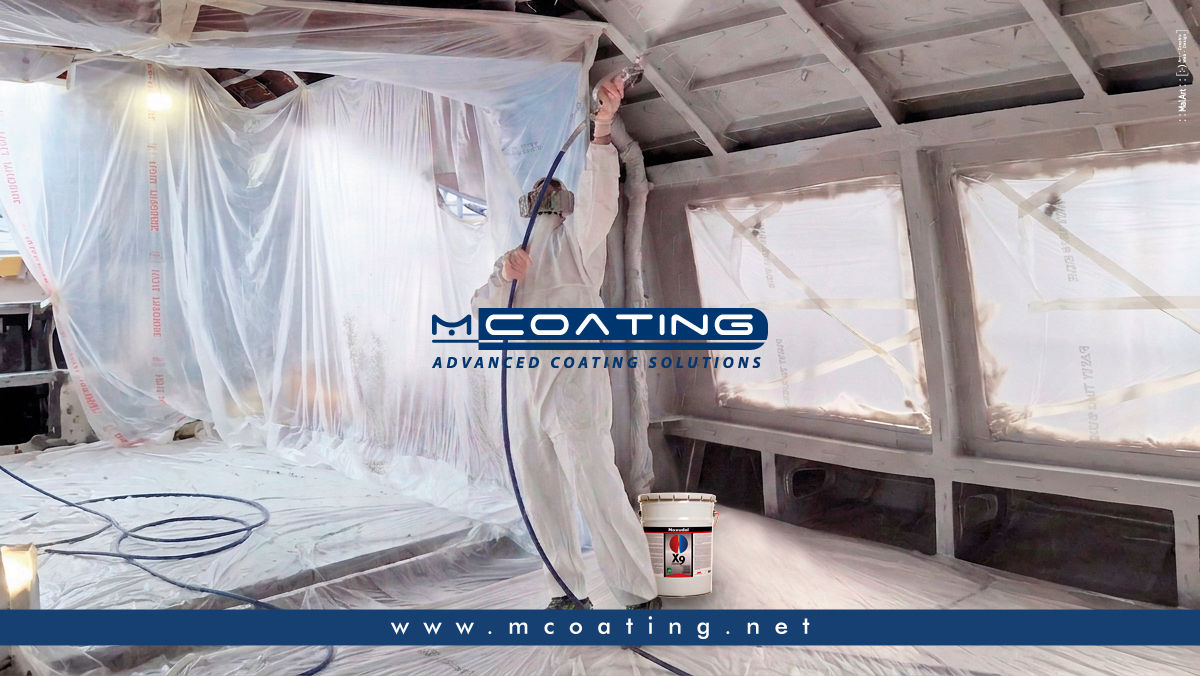
MCoating International | Noxudol X9 | Never without Anti-Condensation! | The invisible threat on board
MCoating International | Noxudol X9 | Never without Anti-Condensation! | The invisible threat on board
As fascinating as it is hostile, the marine environment has always represented one of humanity's most captivating realities and, at the same time, one of its greatest challenges. From the exploration of its depths to the navigation of its vast surface, the sea has continuously driven human curiosity, pushing the boundaries of technology, engineering, and innovation.
Among the many challenges associated with navigation, one of the most critical and often underestimated is the management of humidity and condensation. Vessels are constantly exposed to moisture, salt, limited ventilation, and significant temperature variations. Even moderate temperature differences can become a critical factor when combined with high humidity and salt exposure. The interaction between cold surfaces and humid air creates the perfect conditions for condensation - an invisible process that can progressively compromise the vessel’s integrity if not properly controlled.
Condensation represents a serious technical challenge that affects the durability, reliability, and safety of marine assets: when humidity accumulates and condensation remains uncontrolled, the consequences can be severe; corrosion processes accelerate, insulation materials deteriorate, electrical systems and sensitive equipment can be damaged, and favourable conditions are created for mould and microorganism growth.
The most dangerous aspect of condensation is precisely its invisibility…the damage often begins long before visible signs appear.
For these reasons, thermal insulation and condensation control are not merely comfort-related solutions, but essential requirements for ensuring safety, durability, energy efficiency, and long-term protection in modern marine engineerin
Technological advances have led to the development of increasingly efficient thermal insulation coatings specifically designed for marine applications. When correctly selected and properly applied, anti-condensation coatings create a thermal barrier that reduces temperature differences between surfaces and the surrounding environment, preventing condensation formation and protecting critical areas of the vessel.
However, the effectiveness of an anti-condensation system depends not only on the application process, but first and foremost on the quality and reliability of the product itself. Anti-condensation coatings are often applied during the construction phase of a yacht or vessel, becoming an invisible but fundamental part of the final structure. Once the vessel is completed, the coating is no longer visible. Its presence is hidden beneath the finished surfaces, and its true value is revealed only through time: in the short term through its application performance, and in the long term through its ability to maintain protection, efficiency, and reliability throughout the vessel’s service life.
Choosing an inadequate anti-condensation product represents a significant risk. It can compromise not only the durability of the vessel, but also the health and safety of the professionals involved in its construction and of the future owners and users who will experience the result of their work.
Modern anti-condensation solutions have evolved towards water-based formulations designed to simplify application while improving safety and environmental performance.
These innovative coatings are generally free from solvents or formulated with significantly reduced levels of Volatile Organic Compounds (VOCs). Their composition makes them safer for operators during application, more suitable for enclosed marine environments, and easier to manage throughout their life cycle. In addition, simplifies installation reducing preparation times, and improving consistency during application.
Another important advantage is their high solids content. Thanks to advanced formulations, a greater percentage of the applied product remains as an effective insulating layer after drying, reducing material loss and allowing the required thickness and performance to be achieved more efficiently.
This technological evolution represents a significant step forward in marine thermal protection, combining easier application, improved worker safety, lower environmental impact, and reliable condensation control in critical areas such as engine rooms, technical compartments, electrical rooms, bulkheads, and accommodation spaces.
Why are solvent-free coatings important?
Solvents are chemical substances traditionally used in coatings to maintain fluidity and facilitate application. During the drying process, many solvents evaporate into the air as Volatile Organic Compounds (VOCs). Although not all solvents present the same level of risk, many organic solvents can have negative effects on worker health, indoor air quality, and the environment. Exposure to solvent vapours during application may cause irritation of the eyes and respiratory system, headaches, dizziness, and requires proper ventilation and protective equipment.
Achieving the desired performance depends not only on the quality of the product but also on its correct application.
Strict adherence to the manufacturer's specifications is essential, including ambient temperature and relative humidity conditions during application, recommended drying and curing times, required coating thickness, and the number of coats applied.
Only a properly selected and correctly applied anti-condensation system can guarantee optimal thermal insulation, long-lasting protection against moisture, improved onboard comfort, reduced maintenance requirements, and extended vessel service life. By protecting critical areas exposed to humidity — such as engine rooms, technical compartments, bulkheads, accommodation spaces, and other temperature-sensitive areas — anti-condensation coatings contribute to preserving the vessel’s integrity and ensuring safer, more efficient, and more sustainable navigation.
Innovation, Safety and Responsibility
The choice of an anti-condensation system is therefore not only a technical decision, but also a responsibility towards the people who apply it and those who will live and work on board: it is a responsibility towards the quality of the work performed, towards the professionals who dedicate their expertise and effort to building the vessel, and towards the future owners who will enjoy the result of years of craftsmanship, commitment, and innovation.
Selecting safer, high-performance materials means protecting both the vessel and the people connected to it — from those who build it to those who will experience life on board.
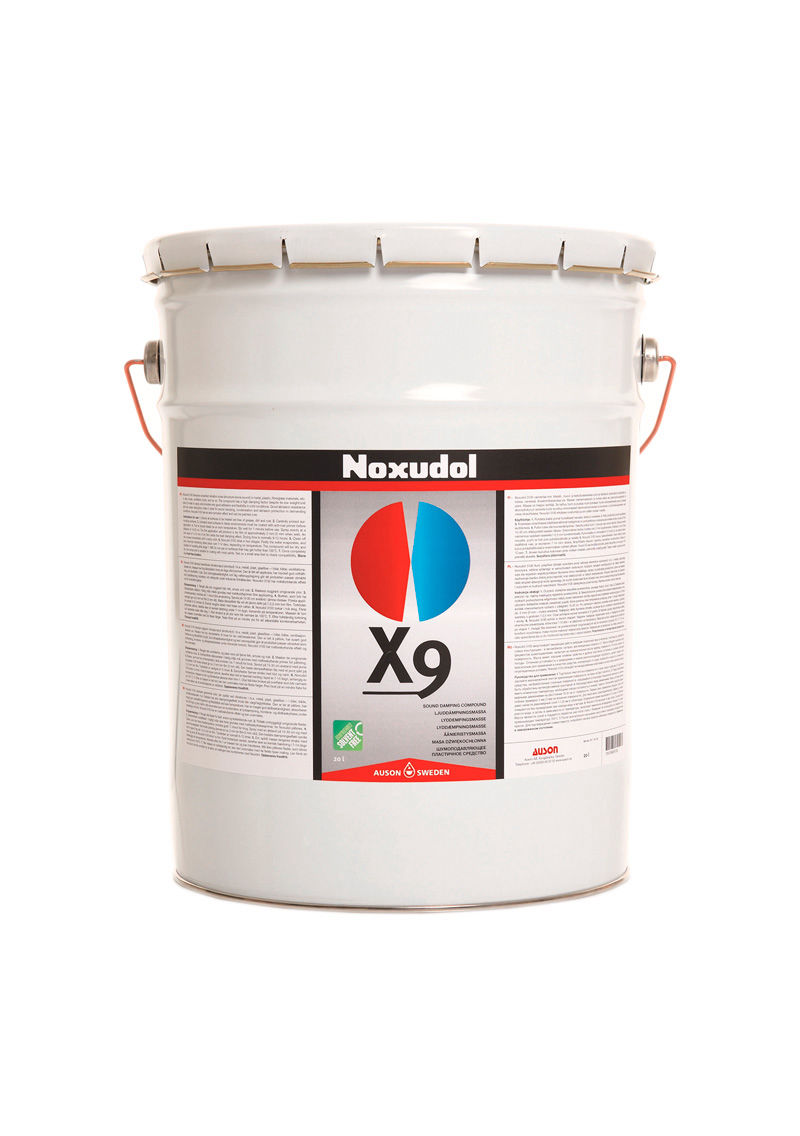
NOXUDOL X9
Heat losses, thermal bridges and condensation are common problems where temperature differences occur. Noxudol X9 is a water-based thermal insulating compound that can be applied on both metal and plastic. This means that the product can be used within a large variety of areas and within a wide temperature range.
FEATURES
Noxudol X9 has a low coefficient of thermal conductivity that gives the compound extremely good protection against condensation. The product is consequently used in areas including insulation of boat hulls, treatment of ventilation plants and thermal insulation of machine components. Noxudol X9 is also used to protect installations within industry. Noxudol X9 is a thermal insulation and condensation protection paste intended for metal and plastic in thickness between 1-3 mm, like ships’ hulls, ventilating ducts etc.
MCoating International is a Dutch-Italian Company providing innovative solutions for the Marine, Superyacht, Offshore and Industrial sectors.
Our expertise includes Thermal and Acoustic Insulation, Anticondensation, Passive Fire Protection, Antifouling, Corrosion Protection and Lightweight Insulation Panels for Engine Rooms and Technical Spaces.
More than coatings, we deliver complete Marine Performance Systems designed to improve Comfort, Safety, Energy Efficiency and Durability while reducing Weight, Maintenance and Operating Costs.
Combining Advanced Materials, Engineering Support and Practical Experience, we help Shipyards, Owners and Contractors find the most effective solution for every project.
Need advice for your next project? Contact our specialists today..

Laagraven 5D
3439 LG Nieuwegein
Utrecht - NL
KvK: 57563071
BTW: NL002525552B18
©2004- MCoating | Advanced Coating Solutions - All Rights Reserved | Credits |